Flusche & Fitzgerald brings the criminal stakes of Virginia reckless driving into focus for motorists who may mistake the charge for an ordinary speeding ticket. For Virginia residents and out-of-state travelers alike, reckless driving can mean a Class 1 misdemeanor with potential jail time, substantial fines, and license consequences. The firm challenges those charges before a roadside citation can become the point where a driver’s record, mobility, and livelihood all begin to unravel.
Flusche & Fitzgerald draws a clear line between ordinary speeding and Virginia reckless driving, where crossing a legal threshold can turn a traffic matter into a criminal case. Once an allegation crosses that line, the evidence used to establish the charge becomes critical. The firm tests how the allegation was built, from the evidence used to establish it to weaknesses that can determine whether the Commonwealth can prove reckless driving.
What that review can reveal is whether the evidence supports a charge with consequences that reach far beyond an ordinary traffic infraction. Reckless driving is generally a Class 1 misdemeanor, exposing a driver to potential penalties of up to 12 months in jail and a $2,500 fine, while courts can also suspend driving privileges in qualifying cases. For a delivery driver, road-based professional, or parent managing the family commute, those consequences can travel from the courtroom into a paycheck, a job, and daily life.

Speed makes that review especially important because the number recorded at the roadside can determine whether a speeding allegation crosses into reckless driving. The dividing line can be numerical: Virginia law allows a reckless-driving-by-speed charge when the alleged speed is at least 20 mph above the applicable limit or above 85 mph regardless of the posted limit. With the difference between a traffic infraction and a criminal charge potentially turning on only a few miles per hour, a Virginia reckless driving lawyer can look behind the number on the citation to examine how the alleged speed was established.
For an out-of-state motorist, what looked like a speeding stop may take on a very different meaning after the driver leaves Virginia. Returning home does not reduce the citation to a payable ticket; a criminal classification and Virginia court date can instead bring Virginia misdemeanor defense into a case the traveler may have expected to leave behind. Flusche & Fitzgerald helps nonresident drivers address that Virginia case even after the road has carried them hundreds of miles from where it began.
“The danger is assuming the word ‘speed’ tells you everything about the case,” a firm spokesperson said. “A driver may be thinking about the cost of a ticket when the real question is what the charge puts at risk. Recognizing that difference early gives the driver a better chance to examine the evidence and respond to what the case actually is.”
A Reckless Driving Defense Starts With How the Charge Was Built
A citation records the allegation, not the case behind it. Flusche & Fitzgerald examines how the speed was established, including equipment records, roadway conditions, and details of the stop—questions that can matter when an alleged speed sits near the reckless-driving threshold. Through its Virginia reckless driving attorney work, the firm uses those details to test whether the Commonwealth can prove the charge.
Defense strategy follows what that review reveals. A driver cited near the threshold may present different questions from one accused of traveling well beyond it, while driving history and other case facts can shape challenges, reduction arguments, or dismissal. When driving privileges are also at risk, the firm’s Virginia driver’s license suspension lawyer services address those consequences alongside the case.
Flusche & Fitzgerald adjusts its scrutiny when the allegation changes. Its Virginia DUI Defense Lawyer services and DUI defence attorney work address impairment evidence, its Virginia Hit-and-Run Lawyer services and hit and run attorney work examine conduct after a collision, and its Virginia Misdemeanor Defense and Virginia Misdemeanor Defense work apply the same evidence-first approach when criminal consequences are at stake.
Flusche & Fitzgerald Key Facts About Virginia Reckless Driving
Criminal classification: Reckless driving is generally a Class 1 misdemeanor, not an ordinary traffic infraction.
Potential penalties: A conviction can carry up to 12 months in jail, a $2,500 fine, and possible license consequences.
Speed threshold: Driving at least 20 mph above the applicable limit or above 85 mph can support a reckless-driving-by-speed charge.
Frequently Asked Questions
Q: How does Flusche & Fitzgerald defend reckless driving charges?
A: The firm examines the evidence and circumstances behind the charge to identify defenses supported by the case.
Q: Does Flusche & Fitzgerald represent out-of-state drivers?
A: Yes. The firm represents nonresident motorists, including drivers who have returned home after being cited in Virginia.
To learn how Flusche & Fitzgerald helps drivers fight Virginia reckless driving charges and protect what is at stake beyond the citation, visit https://www.andrewflusche.com/.
About Flusche & Fitzgerald
Flusche & Fitzgerald works where the roadside encounter ends and the legal consequences begin. Based in Spotsylvania Courthouse, Virginia, the firm concentrates on traffic and misdemeanor matters that can follow drivers into court, onto their driving records, and back into their working lives. Its practice is built around helping motorists understand what they are actually facing before deciding what comes next.
###
Contact
Flusche & Fitzgerald
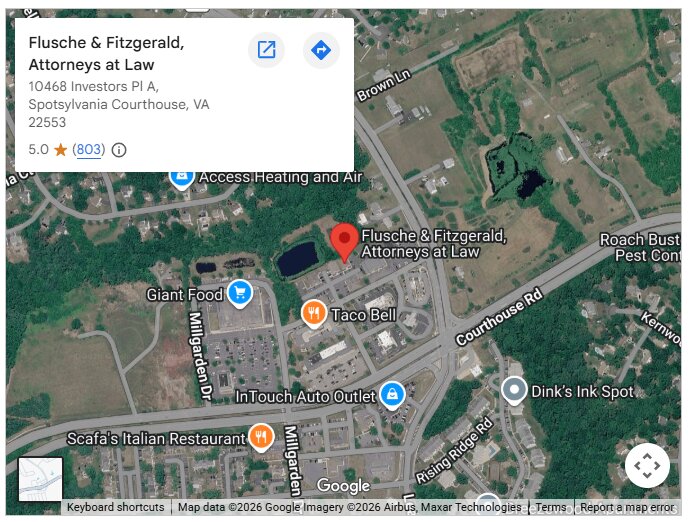
10468 Investors Pl A, Spotsylvania Courthouse, VA 22553
(540) 318-5824
https://www.andrewflusche.com/
Facebook: https://www.facebook.com/pages/Andrew-Flusche-Traffic-and-Misdemeanor-Defense-Attorney/52469300715
YouTube: https://www.youtube.com/user/aflusche
Disclaimer: This press release is provided for general informational purposes only and does not constitute legal advice. Reading this release or contacting Flusche & Fitzgerald does not create an attorney-client relationship. Every case is unique, and legal outcomes depend on the specific facts and applicable law.
Source: 38 Digital Market News
Release ID: 2607494



